


Social value: New homes: real value
07.07.26

Patrick Devlin
During a briefing for elected members last week on one of our regeneration projects outside London, one of the councillors invited us to visit her home. She was slightly apologetic that it had been built within the last fifty years, but explained how its split-level design made the most of a steeply sloping site; she loved living there. Over the years, I've been invited into several PTE-designed homes, where residents have proudly shown us the spaces they have made their own.
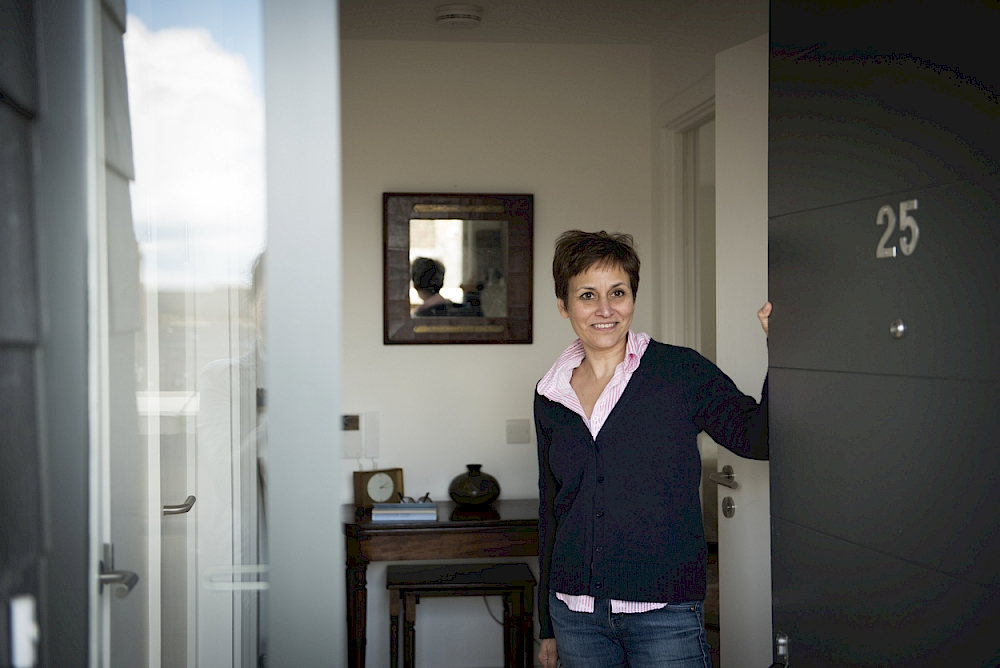
Public Health England has highlighted the value of a good home: “the right home environment… provides a base from which to sustain a job, contribute to the community, and achieve a decent quality of life”. A good home is about more than a roof, warmth and security, important though these essentials are. The current level of homelessness – indeed, any homelessness – is inexcusable in our still-wealthy society. A good home also provides connections to people and facilities, and a sense of pride and identification with ‘my’ home that creates the solid foundation on which a happy life depends.
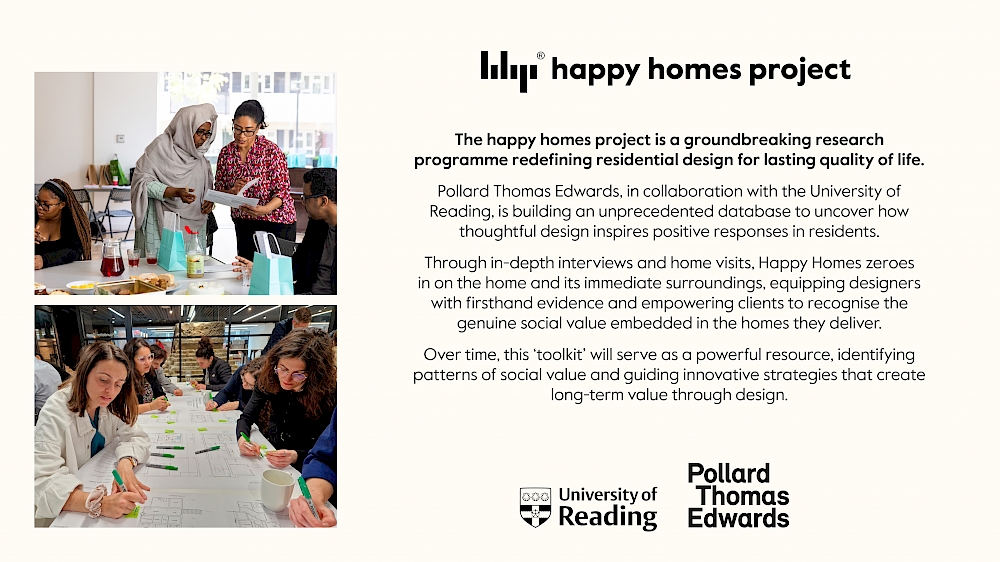
We can research the impact of design on this sense of security, pride and ownership through Post Occupancy Evaluation (POE), and authorities including the GLA are investing in this kind of analysis. By automating much of the data collection and presentation, PTE’s Happy Homes Toolkit makes it quick and enjoyable for residents to participate in POE and share their lived experience of their homes, while making the process more cost-effective for housing providers and developers.
While the economic and policy context may have changed – sometimes fundamentally – by the time longer-term studies report, speeding up evidence gathering in this way makes it more realistic for large landlords and developers, both public and private, to incorporate findings into design guidance. It can also help inform national, local and professional policymaking.
In the near future, the Happy Homes Project will begin combining parametric building data with its growing bank of resident responses to create a rigorously sourced, live database showing the impact of design decisions on resident happiness. At that point, policymakers will be better equipped to develop policies that support genuinely happier homes.